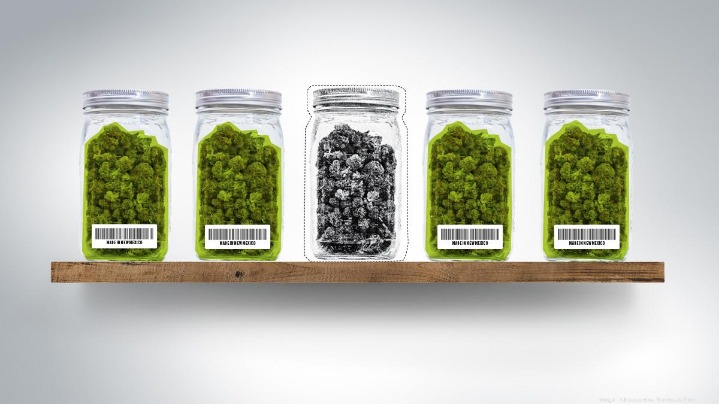
Excessive regulations and crackdowns can inadvertently create scarcities, potentially fueling further underground trading (Investopedia). According to Kilmer, many states have mismanaged this transition, focusing too much on regulating legal weed companies without helping them compete with criminal organizations. Alcohol prohibition was repealed in December 1933, but many states kept liquor bans on the books into the 1950s, creating the same kind of patchwork we now see with marijuana laws.
- According to various researchers and journalists, many individuals manage their disorders with the black market’s help.
- In Africa, a significant challenge lies in evading customs duties and value-added taxes.
- Libertarians have argued that the only purpose of the government is to guarantee private property.
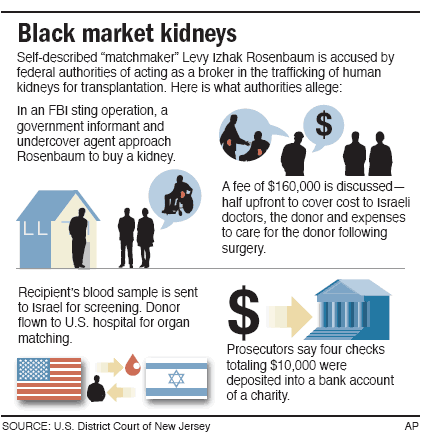
- Furthermore, China, India, the Philippines, and Pakistan were the leading destination countries for transplant tourism, in which people travel abroad to obtain organs.
- This undermines efforts to reduce smoking prevalence and protect individuals, particularly the youth, from the harms of smoking (PMI Global).
Illegal Organ Trafficking Is Big Business, And Vulnerable People Are At Risk Could An Ethical Organ Trade Solve This?
Yet, many who oppose such legalisation claim that it is naive to believe that regulated markets in human kidneys would mitigate the abuses of the black market. Rather than mitigating the abuses of the black market, such people claim, legalising markets in human kidneys will increase them. This is because the typical kidney vendor would lack adequate access to legal representation and so the protections that the proponents of kidney markets believe would be ensured by regulatory control would be illusory. In addition to the Declaration of Istanbul, countries are attempting different measures to address the illegal organ trade.
Black Economy: AKA Black Market, Overview And Examples
Victims are often lured with false promises of employment or a better life, only to find themselves trapped in abusive and inhumane conditions. Human trafficking is a global issue, affecting millions of people and generating billions of dollars in illegal profits each year. Efforts to combat this scourge are complicated by the clandestine nature of the trade and the involvement of corrupt officials in some regions.
How Safe Is Your Weed? Patchy Regulations May Leave Contaminants In The Weed Supply
- Black market sellers may engage in price discrimination, charging different prices to different customers based on their willingness to pay for the illegal goods or services.
- In Thailand, a massage parlor operator ran for public office in 2003 on a platform of criticizing the police — in effect, running to defend his own interests in the trade in human beings while tapping into broader public discontent.
- The counterfeit goods market is a prime example, where legitimate brands suffer from lost sales and damage to their reputation, while counterfeiters reap the benefits without bearing the costs of research, development, and marketing.
- In fact, the iPhone grey market has become such a key player in China’s technology sector that Apple was forced to launch the iPhone 5 in the US and China simultaneously.
- Without corporate income taxes, payroll taxes, or sales taxes, black-market participants can undercut legitimate businesses, making their goods and services more attractive to consumers.
The dynamics between black-market participants is an ecosystem that exists beyond the scope of any legal recourse in case of any dispute, leading to an immense impact on the market’s operational side. Black markets are characterized by their inherent illegality, operating in direct violation of established statutes that define legitimate commerce. This means that either the goods and services themselves are prohibited, or the manner in which they are produced, distributed, or exchanged is unlawful. These markets lack government oversight, as participants conceal their behavior from authorities to avoid detection and penalties. “There’s not a lot of criminal consequences for illegally growing marijuana,” Parsons says. But the strategy here is to try to charge growers with other crimes — that’s why the convoy of vehicles was so long, as it included people from California Fish and Wildlife, the local water board and even code inspectors.

Other aspects at play aside from legal tender include provided visas as part of predetermined agreements. Illegal operations have also seen an increased prominence in legal states due to the drug’s overarching legalization. Some outlets choose to forgo the acquisition of a legal license while still operating out of a storefront and presenting themselves as a licensed dealer.
Riverside County Sheriff Department Sgt. Jeremy Parsons collects cannabis clippings and firearms from an unlicensed greenhouse in Perris, Calif. Linares says some of the unlicensed stores are identified with the green cross emblem, borrowed from the medical marijuana movement that predated recreational stores. The ostensible cabinet store in Long Beach has a heavy metal door and security grates over mirrored windows. And in California, where voters approved recreational pot in 2016, state officials readily acknowledge the industry still operates mostly in the shadows.
Wildlife Trafficking
On the other hand, if supply is lower than demand (say 500 concert tickets go on sale for $30 each, and 750 people line up to buy them), then the principle of supply and demand says that the promoter could have charged a higher price for the tickets. Underground economies do not just include illegal activities, such as the purchase and sale of banned drugs or the illegal sale of weapons. It also includes any unreported income, such as paying restaurant employees under the table or jobs such as babysitting that go unreported. Similarly, any bartering that does not involve the exchange of cash and is not reported is considered part of the underground economy. In other words, the money spent—that’s not accounted for in recorded transactions—theoretically represents the breadth of black market activity.
Criminals seek to disguise the true origin of their illicit funds and integrate them into the legitimate financial system. By doing so, they make it difficult for law enforcement agencies and financial institutions to trace the proceeds back to their illegal activities. The economic consequences of trade-related black market activities extend beyond these examples, impacting various sectors and stakeholders. Governments, businesses, and consumers must work together to combat these activities, implementing effective measures and regulations to mitigate the negative economic effects.
Drugs are an obvious example of this; there has long been a demand for these products despite the danger of some drugs and the laws against using them. But thinking about international illicit trade as just another manifestation of criminal behavior misses a larger, more consequential point. Global criminal activities are transforming the international system, upending the rules, creating new players, and reconfiguring power in international politics and economics.
What Is Black Money?
As a result, the currency underground market is flourishing in nations like Argentina, Iran, and Venezuela. Secondly, they may note that the number of people who would be coerced into selling their kidneys still seems to be far higher than the number of those who are likely to be coerced into selling (eg) their heirlooms. Thus, they may claim, the analogy between allowing markets for such possessions (which seems to be morally acceptable) and markets for kidneys is weakened—and so is the pro‐market response. “Transplant tourism” is a term used to describe typically wealthier individuals traveling abroad to obtain organ transplants from poorer destination countries. Foreigners’ participation is motivated by organ shortages in their home countries or heavy domestic restrictions on organ transplantation.
Why Has The Black Market Continued To Grow While The Rest Of The Economy Has Stagnated?
Often referred to as the underground economy, it is economic transactions that are illegal or are non-compliant behaviors within a set of rules or laws. A black market is distinct from a grey market, which is the legal trade of goods through channels that are unofficial or unauthorized. To combat the link between trade-related black market activities and money laundering, governments, financial institutions, and law enforcement agencies collaborate to implement robust anti-money laundering measures. These include enhanced due diligence, transaction monitoring, and the sharing of intelligence and information.
By exploiting trade-based value transfer systems, criminals can manipulate invoices, overstate or understate the value of goods, and use multiple intermediaries and shell companies to disguise the source and destination of funds. These techniques make it challenging for authorities to detect and disrupt money laundering activities. Many states where recreational cannabis is legal, including California and New Jersey and New York now have online advice to help people locate and buy legal marijuana. Double-check your brick-and-mortar shop to make sure it’s licensed and reputable.
Inside The Chinese-funded And Staffed Marijuana Farms Springing Up Across The US
These restrictions can range from small knives to firearms, either altogether or by classification (e.g., caliber, handguns, automatic weapons, and explosives). The black market supplies the demands for weaponry that cannot be obtained legally or may only be obtained legally after obtaining permits and paying fees. This may be by smuggling the arms from countries where they were bought legally or stolen, or by stealing from arms manufacturers within the country itself, using insiders.
Illicit Drugs
The European Union is a prime example on how price disparities of fuel within its own member state countries tend to incentivize illegal trade producing counterintuitive routes. Lower oil prices in Eastern Europe have created maritime smuggling routes to the United Kingdom and Ireland. Ireland estimates it loses up to $200 million annually with fuel fraud, while up to 20 percent of fuel sold in regular gas stations in Greece is illegal. Turkey is not an oil producer, yet serves as a major transit route for hydrocarbons flowing to Europe from OPEC countries like Iraq and Iran. As an energy hub, Turkey is strategically situated for the illegal trade and lost an estimated US$5 billion in tax revenue in 2017.
Governments often place restrictions on markets because of a philosophical commitment to controlled markets, lack of foresight, martial rationing, or moral ideology. Erika Rasure is globally-recognized as a leading consumer economics subject matter expert, researcher, and educator. She is a financial therapist and transformational coach, with a special interest in helping women learn how to invest. Even after the War of Independence, the government of the United States tried to corral this population. In 1794 the “Whiskey Rebellion” in western Pennsylvania broke out over the government’s attempt to tax corn whiskey.