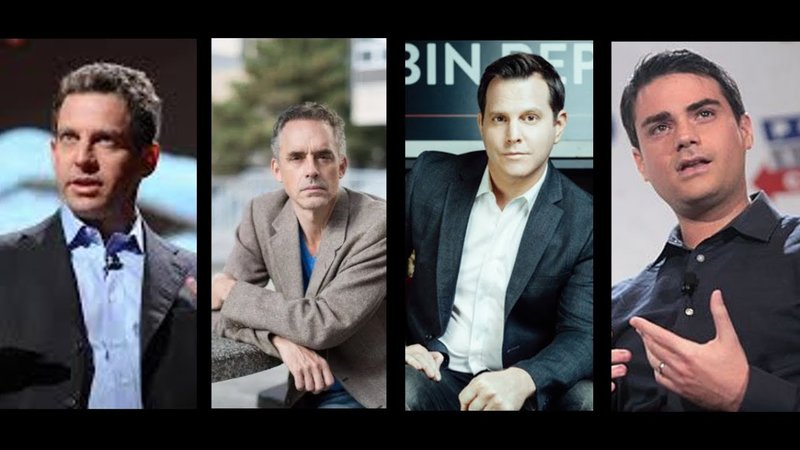
That’s not much of a legacy, since “social media leave so many other people Telling Truths as well as those guys were trying to do,” McWhorter observes wryly. Maybe Bret Weinstein and Heather Heying deserve some credit for that, but at least as much is owed to Yale faculty members Nicholas and Erika Christakis, who are not affiliated with the IDW and also not crazy. The 2020 Harper’s magazine “Letter on Justice and Open Debate,” which drew some of the same ‘white people protecting their privilege’ objections as the IDW, unquestionably had a far greater impact.
Intellectual Dark Web
It is designed to be transparent and flexible, allowing users to explore word use in various forms. LIWC is used in research to analyze the ways people use words when communicating, which can provide rich information about their beliefs, fears, thinking patterns, social relationships, and personalities. Further details on how LIWC was built are available in its documentation (Pennebaker et al. 2015). The extensive research employed in developing LIWC motivated us to use it in our methodology.
New York Times Op-ed
But Whig history’s “moral progress” can also be seen as a paradigm dependent on print. Early commentators on the digital revolution tended to assume that this would simply accelerate the existing trajectory of the print revolution, and thus continue Whig history. Yet Kisin is right to express a newfound ambivalence about that core print-era value, free debate, for the simple reason that existing evidence suggests the digital revolution is not extending but reversing many aspects of the print paradigm.
Comments On This Article
In the name of diversity, they claimed, students at Stanford rejected cultural excellence, demanding to remove “great books” written by “dead white men” from their general humanities syllabus. In the name of protecting minorities, went a similar argument, students at the University of Michigan abandoned the principle of free speech and sought to impose speech codes banning remarks that could be perceived as racist. It was in a flurry of reports over such campus controversies that Richard Bernstein helped popularize the term “political correctness” as we know it today.

Contributor: Trump Has A Gift For Identifying America’s Problems (and Making Them Worse)
He is known for coining the term “Intellectual Dark Web” and is currently involved in intellectual discussions, podcasts, and exploring topics related to physics, economics, and societal issues. To highlight Eric’s background, it’s worth noting that he completed his PhD under the supervision of Raoul Bott, a distinguished mathematician. Bott made substantial contributions to topology, differential geometry, and mathematical physics. And it is less well appreciated is that the online alt-right orchestrated by Cernovich, Yiannopoulos, and others had origins quite similar to the somewhat more respectable dark web types that Weiss’s piece describes. Gamergate united men’s rights activists, white nationalists, and neoreactionaries around indignation over the inroads that women and minorities had made into video game culture, previously dominated by young white men.
I would say that Bret and I spent 14, 15 years in classrooms with mostly millennials, and it’s really easy to disabuse people of these ideas in real time when you have time, when you can build trust, when you can build community, and then yank the rug out from under people when they say things that are actually batshit crazy. A series of administrative developments at the college, as well as the introduction of some experimental initiatives, helped transform, or invert, the idea of the event following the 2016 election. Social unrest in Olympia, and the merger of activist groups on campus precipitated a newer, more effective, design for this unique day of advocacy. “Jacob Pius,” who goes by @Yuyencian on Twitter, recently posted a “Map of the national independence movement in Far East” (above).
Professors have always paved the way for discussion—for debate, doubt, and dialogics. They assert, assess, and ascribe to reason and reflection, at least until that reason or reflection is challenged, or until they become complicit in the knowledge-power nexus they have agreed to expose. Such is the case of the privileged contrarians, the exiled academics who have sloppily formed the vestiges of an “Intellectual Dark Web;” a neoliberal enclave of “public intellectuals” determined to reduce the progress of pedagogy to the sterile hierarchy of pedanticism. In China, this intellectual dark web, or zhīshifènzǐ ànwǎng 知识分子暗网, has been embraced by internet users — but there are plenty of homegrown figures whose popularity rivals that of Jordan Peterson or Sam Harris. Like their comrades on 4chan, Chinese internet users go looking for stronger stuff, too, and it often leads them to an intellectual and blogger by the name of Liú Zhòngjìng 刘仲敬, who made a name for himself in the early-2000s on social media platforms like Douban 豆瓣 and Zhihu 知乎 (China’s version of Quora). Like Sargon of Akkad or Black Pigeon Speaks, Liu lays a scholarly, scientific veil over ideas far more extreme than anything found in the mainstream.
The intellectual dark web does not only recycle conservative theories explaining our supposed wave of left-wing irrationalism. The ideas they claim to defend from politically correct opponents of truth are themselves a longstanding part of the United States’s conservative tradition. A common refrain on the dark web is to debunk various left-of-center critiques by arguing that what appears to be systemic inequality is actually the result of individual choices or behavior. In either case, the dark web’s impulse when confronted with claims of inequality is almost always to deny or justify it. Either the left is making up injustices where they do not exist, the argument goes, or they disregard evidence that social disparities are in fact grounded in scientific reality. Both Lehmann and Harris believe that recent cultural trends make a community of heterodox intellectual unnecessary.

What, In Your Opinion, Makes Intellectual Dark Web Special?
Springer Nature or its licensor (e.g. a society or other partner) holds exclusive rights to this article under a publishing agreement with the author(s) or other rightsholder(s); author self-archiving of the accepted manuscript version of this article is solely governed by the terms of such publishing agreement and applicable law. In 1982’s Orality and Literacy, Ong theorised that literacy is so profoundly mind-altering that it “restructures consciousness”. Confined to a relatively small elite until the late Middle Ages, following the invention of the printing press this consciousness revolution spread, by degrees, to a majority of Western populations. As documented by historian Elizabeth Eisenstein, this had far-reaching disruptive consequences including the Reformation, the Thirty Years’ War, the modern nation-state settlement, and the scientific and industrial revolutions. Fixing our institutions is necessary before society can make real progress, Weinstein suggests, and a solution doesn’t lie solely with the left or right.
- In absolute terms, dark web intellectuals enjoy far more access to the mainstream than genuine leftists.
- When I relayed this back to Weinstein and Heying, they quickly concluded that the Evergreen administration had pressured the woman into changing her story—not an impossibility, but also not a claim that could be accepted without evidence.
- For example, last year, students called for the cancelling of “gender-critical feminist” Holly Lawford-Smith’s course on feminism at the University of Melbourne, due to her arguments for the significance of biological sex.
- This problem stems in part from two generations’ worth of dishonesty — both subtle and obvious — from society’s accepted experts, many of whom have been corrupted by their institutions’ relentless drive to survive and continue growing, no matter the cost.
The Intellectual Dark Web: A History (and Possible Future) Paperback – March 17, 2025
“The real Trump derangement syndrome was not to have seen how appalling and dangerous and deranging it was to have a person like this get anywhere near the Oval Office,” Harris added. I interviewed Harris in 2018 for a Daily Beast feature on Rubin, and he was very complimentary of both the man and his show. Fear of offending his right-wing viewer base, Harris said, was why the ostensibly “liberal” Rubin would never criticize Trump for anything, at all. Harris and Szeps both acknowledged their belief that some of this conspiracy theorizing is fueled by failures of crucial institutions.
“I was told that there had been complaints; however, despite asking, I was never told who complained nor the nature of the complaints,” continued Roberts. “The book was then investigated and it was determined that it could not return to sales in its current form.” I found a downloadable PDF copy of the book while searching for something else. Then I wanted to buy a Kindle edition, but the Kindle edition never came out. I found this surprising but now, after a conversation with the author, I know what happened. It’s almost as if life itself is inviting us to embrace difficulty—not as punishment but as a design feature.
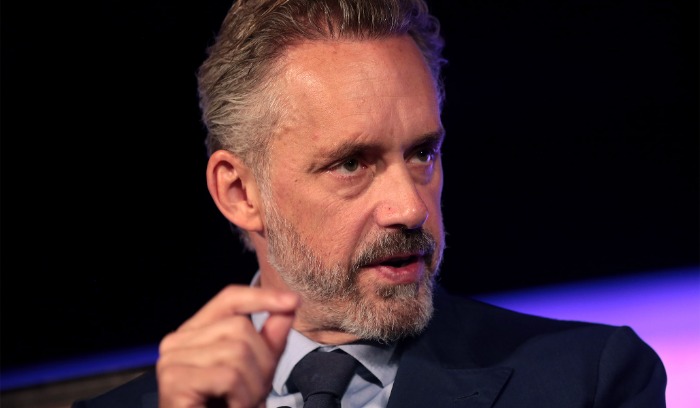
Liu has mostly stuck to his native tongue, despite taking to American social media platforms, suggesting that his Randian goals might be lost in translation. His engagement with Twitter is mostly limited to retweets of ethnic identity activists (the above tweet to the Concordia Association of Manchuria reads, basically, “Basuria congratulates the people of Manchukuo in strengthening their fight to recover their nation”). If we look at things from a historical point of view, Xinjiang, since ancient times, has had a closer relationship with Central Asia and Southwest Asia than East Asia. If we go back to the earliest periods of Chinese history, the Zhou and Han Dynasties, for example — the ethnic composition was different.
The conversation, while popular on YouTube, serves only to demarcate the loose theological divide of “act as if it were true” vs. “religion has evolutionary benefits, ad hoc.” Interestingly, Weinstein moves toward the latter view. He argues that religion has historically benefited social evolution, although it is now less necessary and more toxic than, say, biology. But what he seems to forget is that the evolutionary “right” of free speech, surreptitiously employed by those in power to demean and undermine minorities, has mustered a sort of religiosity of its own. As an example, when Weinstein was confronted by student activists imploring him to reconsider his stance on the Day of Absence, he responded with a trenchant “thou shalt not silence me” ambrosia. The resulting mayhem brought about by his appearance on Fox News invited a significant contingent of alt-right hooligans, as well as a squad of riot police, to campus on May Day. This threat of violent Western chauvinism spurred a mass exodus of students from Evergreen, disenchanted by the administration’s lack of action.
Douglas Murray, who originally became prominent as a “New Atheist,” is another IDW figure who has slotted perfectly into the conventional far right via his anti-immigrant screeds which routinely propagate white nationalist talking points and anti-Muslim bigotry. He’s also been a cheerleader for Israel’s massacre in Gaza, claiming that all Palestinians are responsible for the terrorist attacks Hamas carried out Oct. 7 of last year, a violent sentiment no different from what Al Qaeda routinely says about its civilian targets. Ben Shapiro, an Orthodox Jewish podcaster whose political views are so extreme that he has even appeared on a neo-Nazi podcast, is Peterson’s Daily Wire colleague. After denouncing Trump as a corrupt liberal in 2016 (Weiss notably omitted this motivation in her IDW piece), he is now 100 percent in favor of electing Trump in 2024. This is where the “Intellectual Dark Web,” with its warmed-over libertarian bromides, has been particularly useful for Republicans. While libertarianism is a conservative cousin of neoliberalism, because it claims to adhere to principles advocated by 19th century liberal figures like John Stuart Mill, it can be less authoritarian than Trump’s apocalyptic fascism, even as it also has been an important source of his racist rhetoric.